
01
It learns your product
TestMutant builds a QA memory from your requirements, tickets, flows, past runs, failures, and release context, so coverage does not start from zero every time.
Agentic QA for AI-speed teams.
TestMutant builds a memory of your product, then uses it to keep important behavior verified. It reads requirements, Jira or Linear tickets, PRs, and past runs, turns product intent into Playwright coverage, runs it, and reports failures with the evidence developers need.
How it works
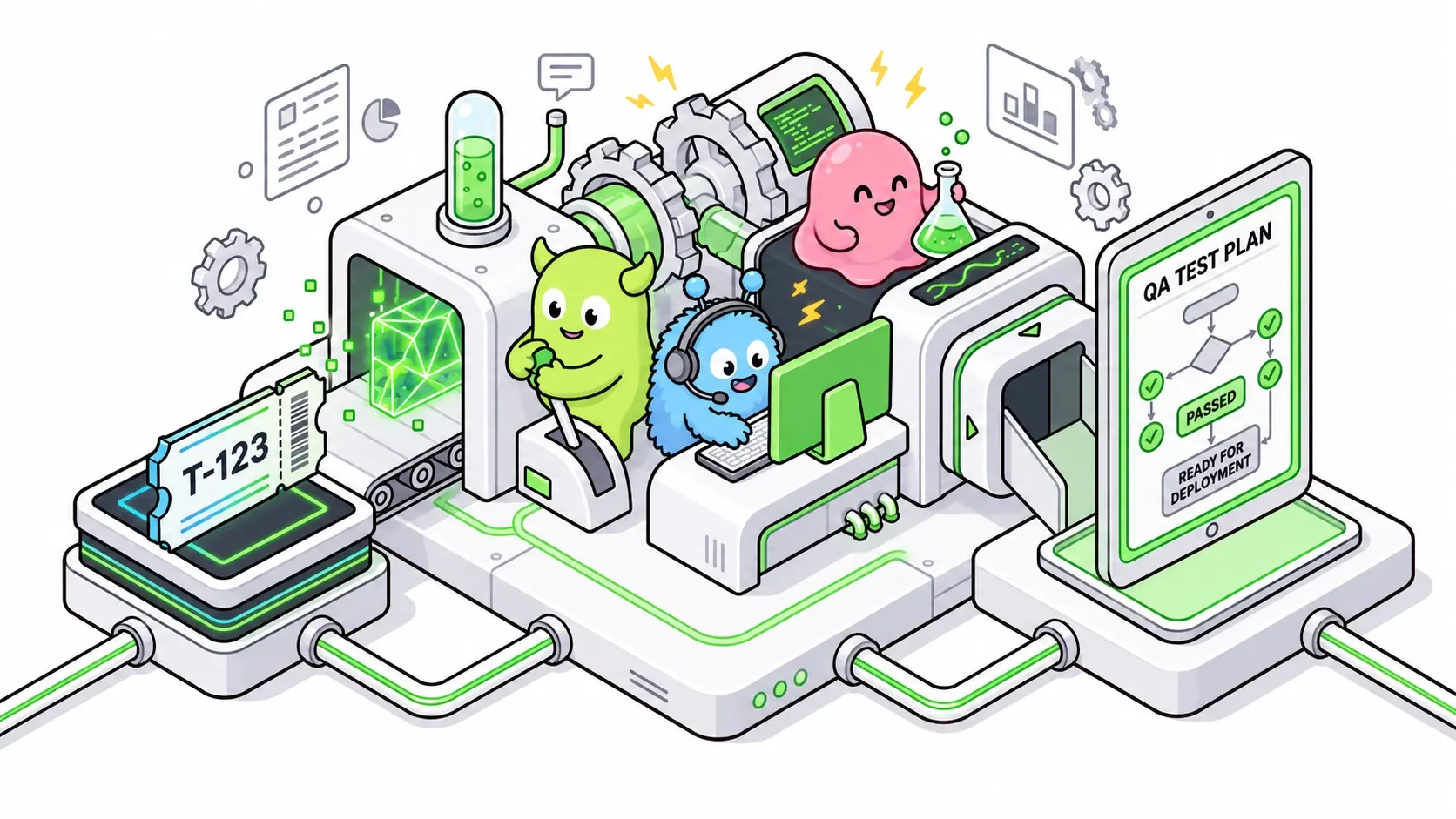
TestMutant connects product context, generated coverage, execution, and failure evidence into one loop.
TestMutant builds a QA memory from your requirements, tickets, flows, past runs, failures, and release context, so coverage does not start from zero every time.

Connect Jira, Linear, GitHub, or start with a plain requirement. The agent identifies what behavior changed and turns it into Playwright checks.

When something fails, TestMutant reports the trace, screenshot, console output, and network signals developers need to understand the issue fast.
Example report
Production bugs are expensive because they arrive late and vague. TestMutant shows what failed, where it failed, and the browser signals behind it.
When to use it
From ticket to test to evidence.
Start with a requirement or connect Jira, Linear, GitHub, and CI/CD. TestMutant builds project memory, turns product work into maintained browser coverage, runs it continuously, and brings failures back with the evidence developers need to act.
read Linear issue: "Users can check out with a saved card"
remember Match against known checkout flows and past failures
plan Identify critical path, edge cases, and expected result
write Generate Playwright coverage for checkout
run Execute against staging with test credentials
report Attach trace, screenshot, console, and network evidence
Loop: project memory → coverage → run → evidence